Often the hardest part of winter fishing is getting motivated. Generally the cold wind is up or the tides are wrong, whereas in summer you just get out there and do it.
The reality is I can only go for so long before I am in dire need of a fishing fix, and when you’ve got to go, you’ve got to go, no matter what Mother Nature is throwing at you. This is where the saying “fish your feet” comes into play. Try somewhere new, or somewhere you’ve never fished before. It’s a great way to build a database of spots in your mind. Otherwise, you’ll keep fishing the same areas, learning nothing new.
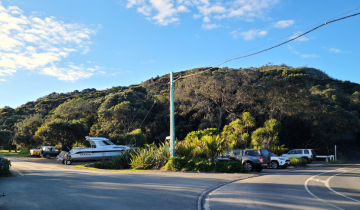
Forecast was easterly 15 knots building to 25 and gusting 30 knots. That’s ugly fishing out of Omaha, as an easterly is directly onshore and brings with it a big swell. The only positive is that it makes launching on the estuary ramp easy. Heading out at dawn often gives you a few hours before the wind kicks in, and the worst-case scenario is fishing inside the estuary.
Having gone out past the green marker on the rock, I noticed the low foul and rubble extending around 100 metres to the south. My Furuno TZtouch with AccuFish shows the size of fish passing through the centre of the transducer, marking them directly on the chart plotter. For years I had seen countless fish, including some very large ones, on this foul but had never bothered fishing it. After all, it sits only metres from the entrance and in just three metres of water.
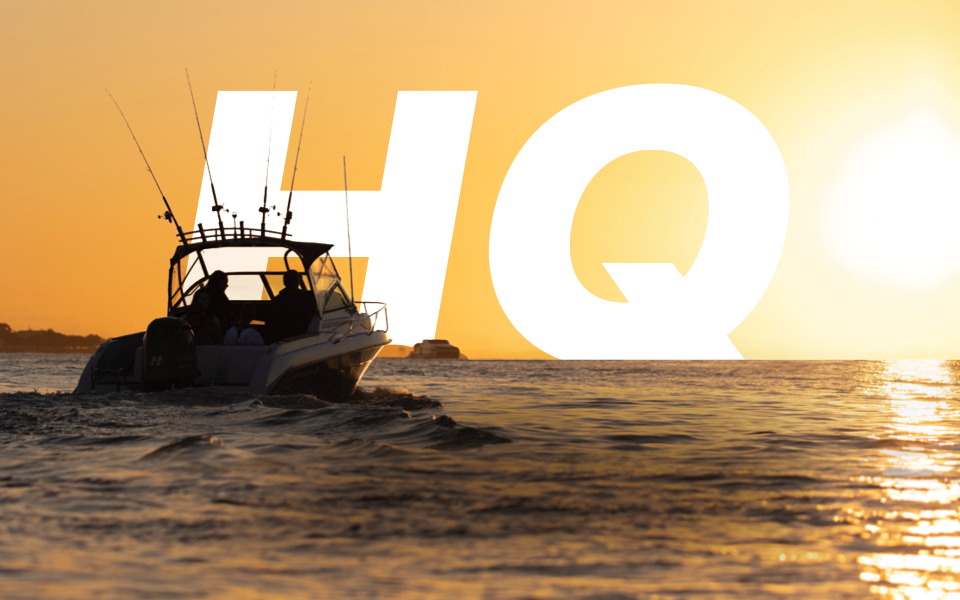
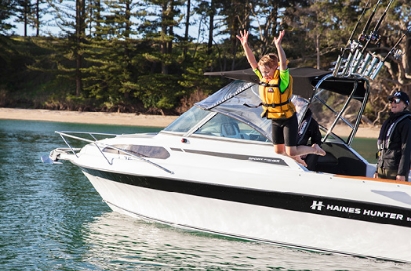
At the 5-knot marker there was already a fair swell rolling in and the wind was starting to build. My Haines Hunter could handle the conditions, but my body wasn’t as keen. No fish is worth risking your life for. I figured I could anchor just outside the foul for an hour. With the incoming tide, the boat would sit safely to the swell. It’s all about fishing with the wind and tide moving in the same direction.
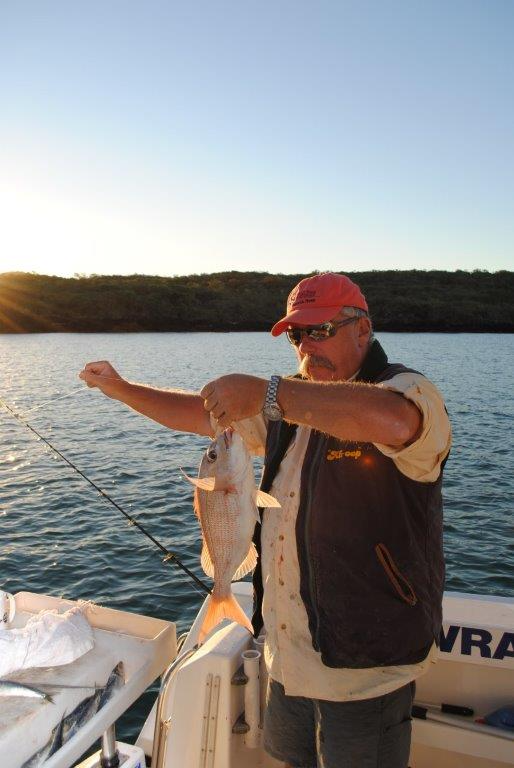
Admittedly, my little 485 was surging around, but I decided to give it a couple of baits before retreating into the estuary shallows. The first bait was hit before I could even cast the second. A 32cm snapper was quickly released, only for the second rod to nearly be ripped from the holder. That fish went around 55cm and found its way into the bin. By now conditions were getting uglier and it was time to leave. Two more baits went out while I packed up. Both rods loaded up, producing another snapper around the 55cm mark, while the other fish busted me off completely. Unable to help myself, I sent out a few more baits and had a full limit in less than an hour from launching.
So, what did I learn? Habitat is everything. Looking around, there was an abundance of food - baitfish, shellfish, rocks and kelp all close by. Why wouldn’t fish live there year-round? When fishing current, it pays to use tougher baits such as kahawai, mullet, jack mackerel, pilchards or squid that won’t be stripped from the hook by smaller fish.
Fishing in the inner gulf has been far better than I expected for this time of year, although getting out has been dictated by weather windows. A mate who normally fishes only soft baits and lures was so desperate for a fishing fix that he rang asking where he should try, even if it meant bait fishing. I suggested the lee of Rangitoto on an incoming tide. Out from Flax Point in around 12 metres are small patches of rubble that hold snapper year-round. The trick is to strayline and cast your baits well back from the boat. Baits close to the boat get jerked around as the boat swings, whereas baits further back remain more natural.
When he got back, he called to say he had caught a limit of 35–45cm snapper. Feeling confident, he then switched to soft baits while the fish were still feeding. After half an hour of rolling around without a touch, he accepted defeat and learned that winter snapper in shallow water often feed very differently to summer fish.
In reality, over the winter months, I find you need to get out early and be back before the wind arrives. The hardest part is motivation on those cold mornings. My trick is simple. Before heading to bed, I pull the damp towels off the heated towel rail and wrap my fishing clothes around the bars, with my shoes sitting on top. Climbing into warm clothes and warm shoes makes all the difference. Just remember to put the towels back, otherwise you’ll come home to one grumpy wife — and no amount of fresh fish will smooth that over.
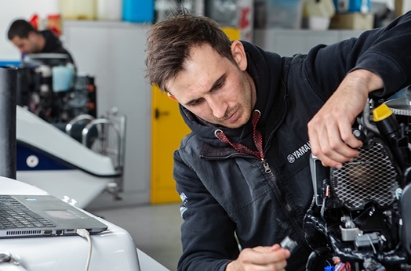
Some of the nicest days of the year happen in winter. Get out there, give the boat a run, and enjoy it. If you can’t make it out on the water, give Haines Hunter HQ a call and book your boat in for a service — they’re already booked out a month ahead.
Book a service